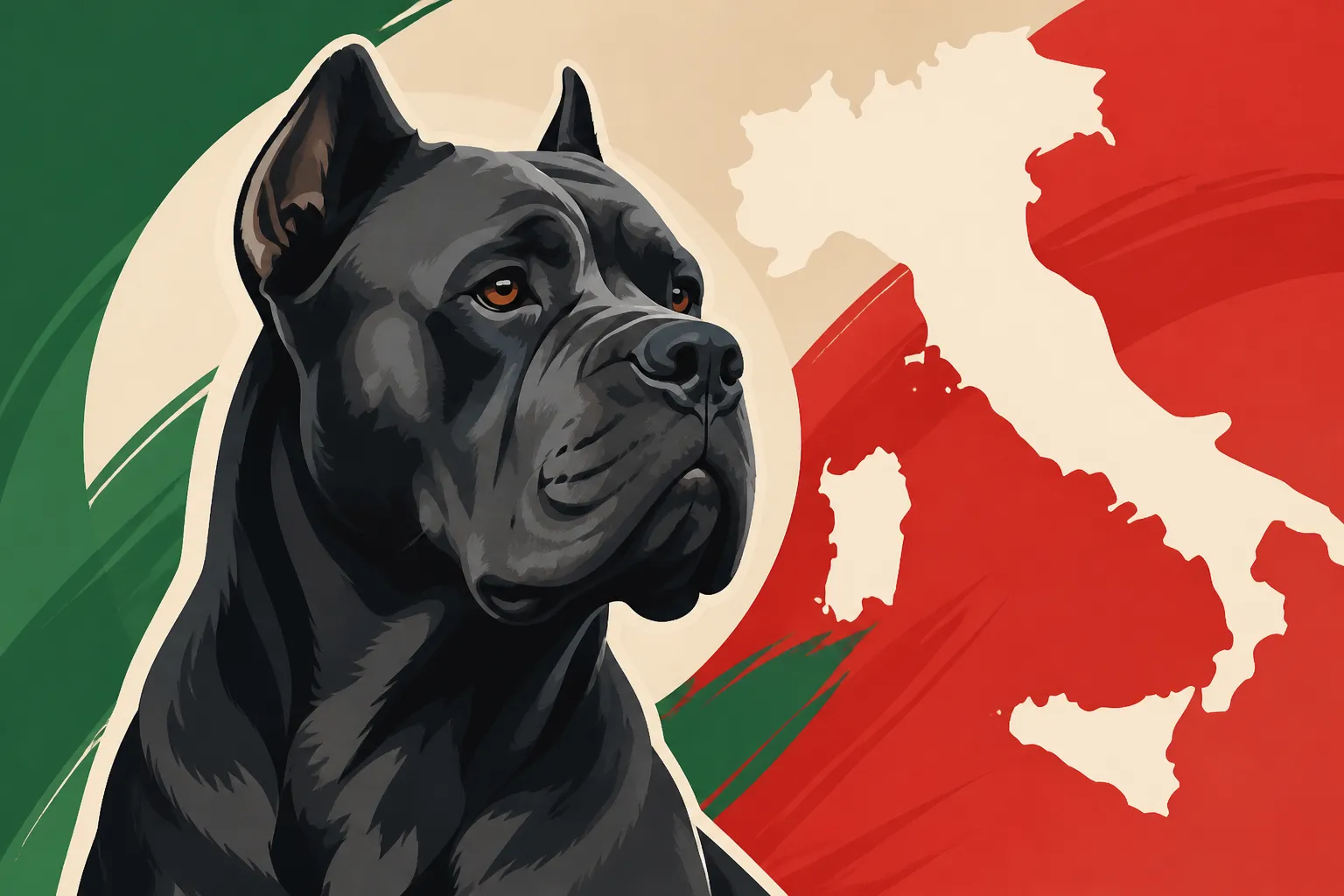
What Cane Corso Means in Italian
When you first hear "Cane Corso," it might sound exotic, maybe even a little mysterious, especially if your ears aren't tuned to Italian. Many prospective owners and even some seasoned dog enthusiasts are curious about the name's origins, wondering if it implies something about the breed's size, temperament, or ancient lineage. This guide aims to pull back the curtain, exploring the literal meaning of "Cane Corso" in Italian and delving into the rich history and cultural significance embedded in its powerful name.
The Literal Translation: Breaking Down "Cane Corso"
Let's start with the basics, because understanding the name is the first step to truly appreciating this magnificent breed. When you break "Cane Corso" down into its two components, things become a little clearer, yet also open up some interesting historical debates. It's not just a fancy-sounding name; it carries a weight of tradition and purpose.
"Cane": A Dog, Plain and Simple
The first part, "Cane," is straightforward. In Italian, "cane" simply means "dog." It's the standard, everyday word you'd use for any canine, from a tiny Chihuahua to a massive Great Dane. There's no hidden meaning here, no special nuance implying a specific type of dog, other than, well, a dog. This part of the name tells us nothing about its size, its coat color, or its working abilities; it just identifies it as a member of the species Canis familiaris.
However, even this simple word takes on a profound meaning when paired with "Corso." It grounds the breed in its fundamental identity: a dog. Not a wolf, not a fox, but a loyal, domesticated companion, albeit one with a very specific and demanding set of jobs throughout history. Imagine trying to explain to someone from a remote village centuries ago that you have a "dog-dog" – it would be redundant, yet that’s essentially what "Cane Corso" feels like to an Italian speaker before the "Corso" part is understood.
"Corso": The Etymological Debate
Now, this is where it gets fascinating, and a little debated among scholars and breed enthusiasts. The word "Corso" is the part that gives this breed its distinct identity and hints at its historical purpose. Unlike "cane," "Corso" isn't a simple adjective or noun with a universally agreed-upon single meaning in this context. There are a few compelling theories, each painting a slightly different, but equally powerful, picture of this incredible dog.
One prominent theory links "Corso" to an ancient Latin word, cohors. This word had several meanings, including "courtyard," "enclosure," "guard," or even "protector." Think of a Roman cohort of soldiers – a unit, a guard. This connection immediately conjures images of a dog deeply intertwined with protection and guardianship, tethered to a specific place or charge. It speaks to the breed's historical role as a guardian of property, livestock, and family. This isn't just a pet you find at the local shop, but a sentinel rooted in purpose.
Historical Theories Behind the "Corso" Part of the Name
The journey into the meaning of "Corso" takes us back centuries, truly emphasizing that this isn't just a modern breed; it's a living piece of Italian history. Its name is a direct link to the roles these dogs played in the lives of ordinary people in Southern Italy.
The Roman Roots and "Cohors"
As we touched on, one of the most widely accepted and historically resonant theories connects "Corso" to the Latin word cohors. This isn't just a phonetic coincidence; it ties the Cane Corso directly to its ancient Roman ancestors, the formidable Molossers that served as war dogs and estate guardians. These dogs weren't just pets; they were integral to the functioning of Roman society, protecting homes, farms, and legions. The idea of cohors as a "bodyguard" or "guardian" perfectly encapsulates the core essence of the Cane Corso.
Consider the landscape of ancient Rome: sprawling villas, vast farmlands, and military encampments. Each required robust protection. The dogs of that era, the direct forefathers of the Cane Corso, would have been indispensable in these roles. The word cohors evokes this image of a dog that is part of a protective unit, dedicated to its charge. It’s a powerful testament to the breed's enduring legacy, suggesting that its role as a protector is not merely a trait, but an inherited destiny. This link reminds us that a Cane Corso is not merely a big dog, but a serious guardian with a profound heritage. The Roman War Dog Behind the Cane Corso provides more context on this historical role.
The "Corso" as a Courtyard or Property Dog
Another strong interpretation, closely related to the cohors theory, is that "Corso" refers to the dog's function as a "courtyard dog" or "property dog." In rural Italy, particularly in the southern regions where the breed was revitalized, the Cane Corso was traditionally found guarding the masseria – the fortified farmhouses and estates. These were working dogs, indispensable for protecting livestock from predators and deterring human intruders.
The term "courtyard dog" isn't just about where the dog lived; it describes its sphere of influence and its primary duty. This dog's job was to be vigilant, to patrol its designated territory, and to protect everything within its bounds. They were often tethered by day and loosed at night to patrol, or simply allowed free run of the property during all hours. This is why you often hear of the Cane Corso as a "farmer's dog" – its very name suggests its deep connection to the land and the people who worked it. This isn't a breed for the faint of heart or for someone who wants a purely decorative companion; their historical role is etched into their very being, a constant reminder of their innate desire to guard and protect. Guarding the Masseria in Southern Italy delves deeper into their traditional roles.
The Old Italian Word for Robust or Stout
A third, less common but equally interesting, theory suggests that "Corso" might derive from an old Italian word or dialect that meant "robust," "stout," or "powerful." If you've ever stood next to a well-built Cane Corso, you can immediately see the logic in this interpretation. These are undeniably powerful, muscular dogs, built for strength and endurance. Their physical presence alone speaks volumes about their capability.
This interpretation focuses less on the dog's role and more on its inherent physical characteristics. It celebrates their impressive physique, their solid bone structure, and their imposing stature. While the cohors theory speaks to their mental fortitude and protective instinct, this theory highlights their sheer physical prowess. Both aspects, of course, are crucial to what makes a Cane Corso. They are not only mentally capable guardians but also physically formidable. A robust dog needs a diet to match, and finding high-quality, large-breed specific food and supplements is crucial for their development. Stores like Chewy offer a wide selection of suitable options to help maintain their impressive physique.
Why the Name Matters: Reflecting the Breed's Identity
The name "Cane Corso" isn't just a label; it's a compact history lesson, a job description, and a character profile all rolled into two Italian words. It deeply reflects the identity and inherent traits of this powerful breed.
The Name as a Nod to the Breed's Working History
The very name "Cane Corso" is a constant echo of the breed's past, a direct nod to its origins as a multi-purpose working dog. These weren't idle companions; they were active participants in the demanding lives of Italian farmers and families. From protecting livestock from wolves and wild boars to assisting with cattle drives and guarding entire estates, the Cane Corso was bred for utility and resilience. Their intelligence, strength, and unwavering loyalty were not merely desirable traits, but essential for their survival and the survival of the families they served.
When you bring a Cane Corso into your home today, you are inviting a dog whose lineage is steeped in this working history. The deep-seated instincts to observe, to guard, and to protect are not behaviors learned in a puppy class; they are genetic imperatives passed down through generations. Understanding the name helps you understand the dog in front of you – why they might be reserved with strangers, why they are so devoted to their family, and why they require such dedicated training and socialization. Their history as working dogs means they thrive on purpose and consistent guidance. Neglecting this crucial aspect can lead to behavioral challenges, underscoring why proper training is non-negotiable. The Farm Job the Cane Corso Was Kept For elaborates on these historical duties.
How the Name Captures the Cane Corso's Spirit
Beyond its practical implications, "Cane Corso" captures the very spirit of the breed. It speaks to their courageous nature, their formidable presence, and their deep bond with their human families. The "Corso" element, whether interpreted as "guardian," "courtyard," or "robust," perfectly encapsulates the dog's inherent courage and protective instincts. They are dogs with a strong sense of territory and an even stronger devotion to their loved ones.
This spirit is evident in their demeanor: alert, watchful, and confident. They possess an innate ability to discern friend from foe, often making them aloof with strangers but profoundly affectionate and playful with their chosen family. Their imposing size and powerful build are not just for show; they are tools that enable them to fulfill their protective duties effectively. The name, therefore, is not just descriptive; it’s evocative, summoning the image of a majestic and loyal guardian whose loyalty runs as deep as their ancient heritage. It's a name that commands respect, much like the dogs themselves. This powerful spirit is part of The Character a Cane Corso Judge Expects in the Ring, highlighting its importance even in modern breed standards.
Beyond the Literal: Other Italian Terms and the Breed's Plural
Understanding "Cane Corso" extends beyond its direct translation to appreciating how the breed is referred to in its native language, including its correct plural form.
"Cani Corsi": Understanding the Plural Form
For those speaking English, it's easy to fall into the trap of saying "Cane Corsos" when referring to more than one of these magnificent dogs. However, in proper Italian, the plural form is "Cani Corsi." The word "cane" (dog) becomes "cani" (dogs), and "corso" (the adjective/noun component) becomes "corsi." This follows standard Italian grammatical rules for pluralization.
While "Cane Corsos" is widely understood and accepted in English-speaking communities, knowing "Cani Corsi" shows a deeper appreciation for the breed's Italian heritage. It's a small linguistic detail, but it speaks volumes about respect for their origins. Just like you wouldn't say "one paparazzi, many paparazzis," knowing the correct plural for "Cane Corso" connects you more intimately with the culture from which these dogs emerged. This slight linguistic nuance is just one of many ways the breed proudly wears its Italian roots. Why the Plural Is Cani Corsi goes into more detail on this topic.
Familiar Italian Descriptors for the Cane Corso
While "Cane Corso" is the formal name, in Italy, particularly in the regions where they were historically prominent, these dogs might also be referred to with more casual, descriptive terms that highlight their working nature. You might hear them called simply "the guardian dog" (il cane da guardia) or "the farm dog" (il cane da masseria), emphasizing their historical roles rather than their specific breed name. These informal descriptors reinforce the powerful connection between the dog's identity and its utilitarian purpose.
These terms highlight that for many generations, the Cane Corso wasn't just a breed, but a tool, a partner, a protector. They were part of the fabric of daily life, valued for their abilities above all else. This deep-seated practicality is something that every prospective Cane Corso owner should understand. They aren't just large, impressive dogs; they are dogs with a profound need for purpose and a clear role within their human pack.
Common Misconceptions and the True Essence of the Name
Despite its clear Italian origins, the name "Cane Corso" can sometimes lead to misunderstandings, particularly among those new to the breed or unfamiliar with its history. Clearing up these misconceptions helps paint a more accurate picture of this impressive dog.
Dispelling Myths About the Name's Origins
One common misconception is that "Corso" refers to the island of Corsica, implying that the breed originated there. While Corsica is an Italian island, the Cane Corso's origins are firmly rooted in mainland Southern Italy, specifically the regions of Puglia, Basilicata, and Campania. The phonetic similarity can be misleading, but there's no historical or etymological evidence linking the breed to the island of Corsica. This myth sometimes surfaces, perhaps due to the allure of a more exotic or geographically distinct origin, but the true story is found on the farms and estates of the Italian peninsula.
Another myth is that "Corso" means "course" as in a race, suggesting the dog is built for speed. While Cane Corsos are surprisingly agile for their size, their name has no connection to speed or racing. Their build is for power, endurance, and guarding, not for sprinting. Dismissing these myths helps us focus on the authentic history and characteristics that truly define the Cane Corso.
The Enduring Legacy of "Cane Corso"
The true essence of the name "Cane Corso" lies in its profound connection to the breed's historical function and its deep Italian roots. It's a legacy of protection, loyalty, and strength. This name represents a breed that nearly vanished after World War II, only to be meticulously brought back by dedicated enthusiasts who scoured the remote farms of Southern Italy for surviving examples. Their efforts ensured that the "Cane Corso" as a name, and more importantly, as a living breed, would endure. How the Cane Corso Nearly Disappeared After the War tells this incredible story.
The enduring legacy of the name serves as a constant reminder of the responsibility that comes with owning one of these magnificent dogs. You are not just getting a pet; you are becoming a custodian of a living piece of history. The "Cane Corso" requires an owner who understands and respects its heritage, its instincts, and its profound need for leadership and purpose.
Here's a quick look at the main interpretations of the name:
| Part of Name | Literal Meaning | Common Historical Interpretation | Implications for the Breed |
|---|---|---|---|
| Cane | Dog | Dog | Confirms its canine nature |
| Corso | (No direct single modern translation in this context) | From Latin Cohors (courtyard, guard, protector) | Highlights its role as a guardian of property and family, its protective instincts. |
| Corso | (No direct single modern translation in this context) | Old Italian for "robust" or "stout" | Emphasizes its powerful build, physical strength, and endurance. |
Cane Corsos are incredible dogs, but they are absolutely not for everyone. Their heritage demands a dedicated owner who embraces their intelligence and strength. For new owners, getting the right equipment, like a strong leash and harness, is essential from day one, and you can find many highly-rated, durable options suitable for powerful breeds at retailers like Chewy. Understanding what "Cane Corso" truly means is the first step in appreciating the depth and complexity of this magnificent breed. It’s a name that perfectly encapsulates their role as a steadfast, powerful guardian, a true testament to their Italian legacy.
Disclaimer
This article is for general informational purposes only and does not constitute professional advice. Laws, prices and regulations vary by location and change over time. Consult a qualified professional for guidance on your specific situation.